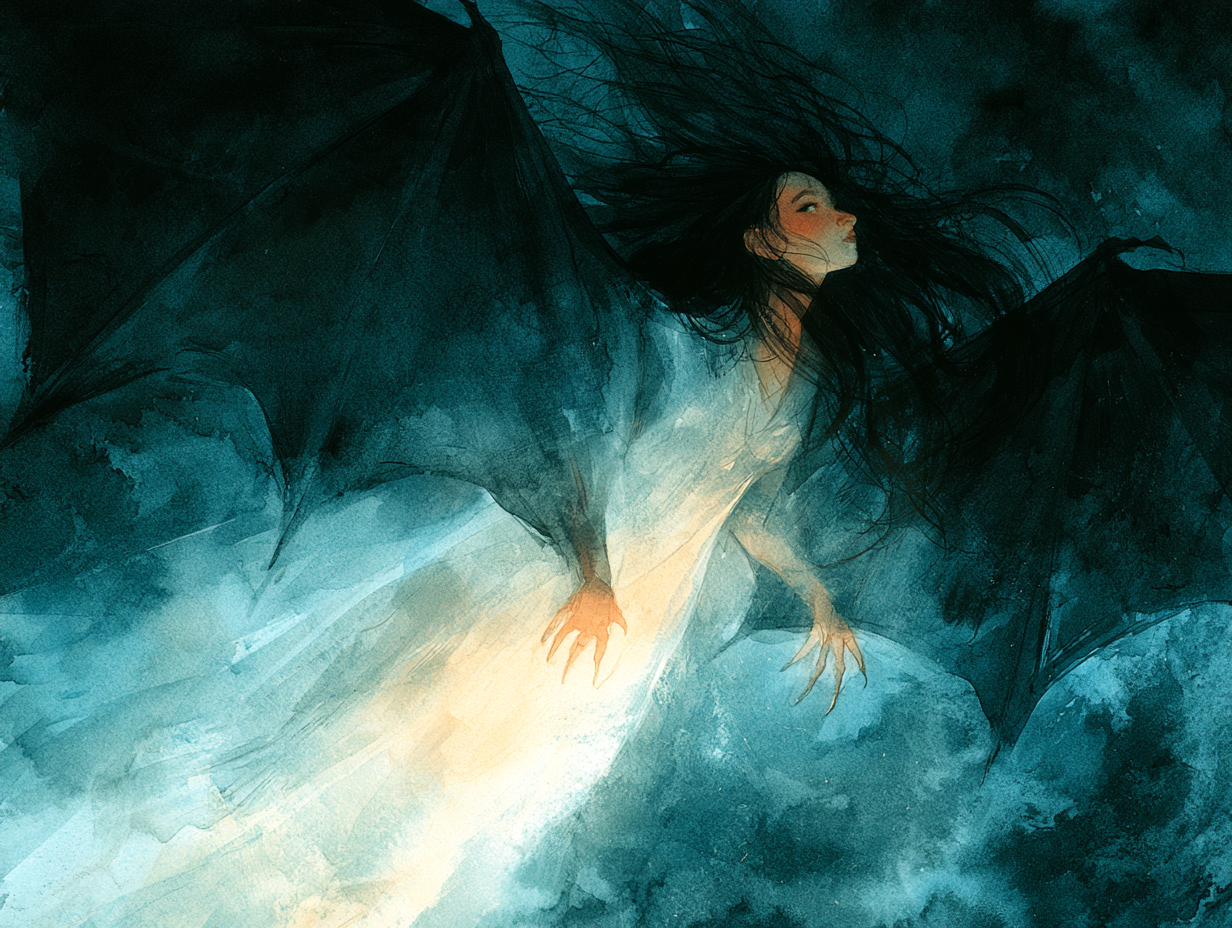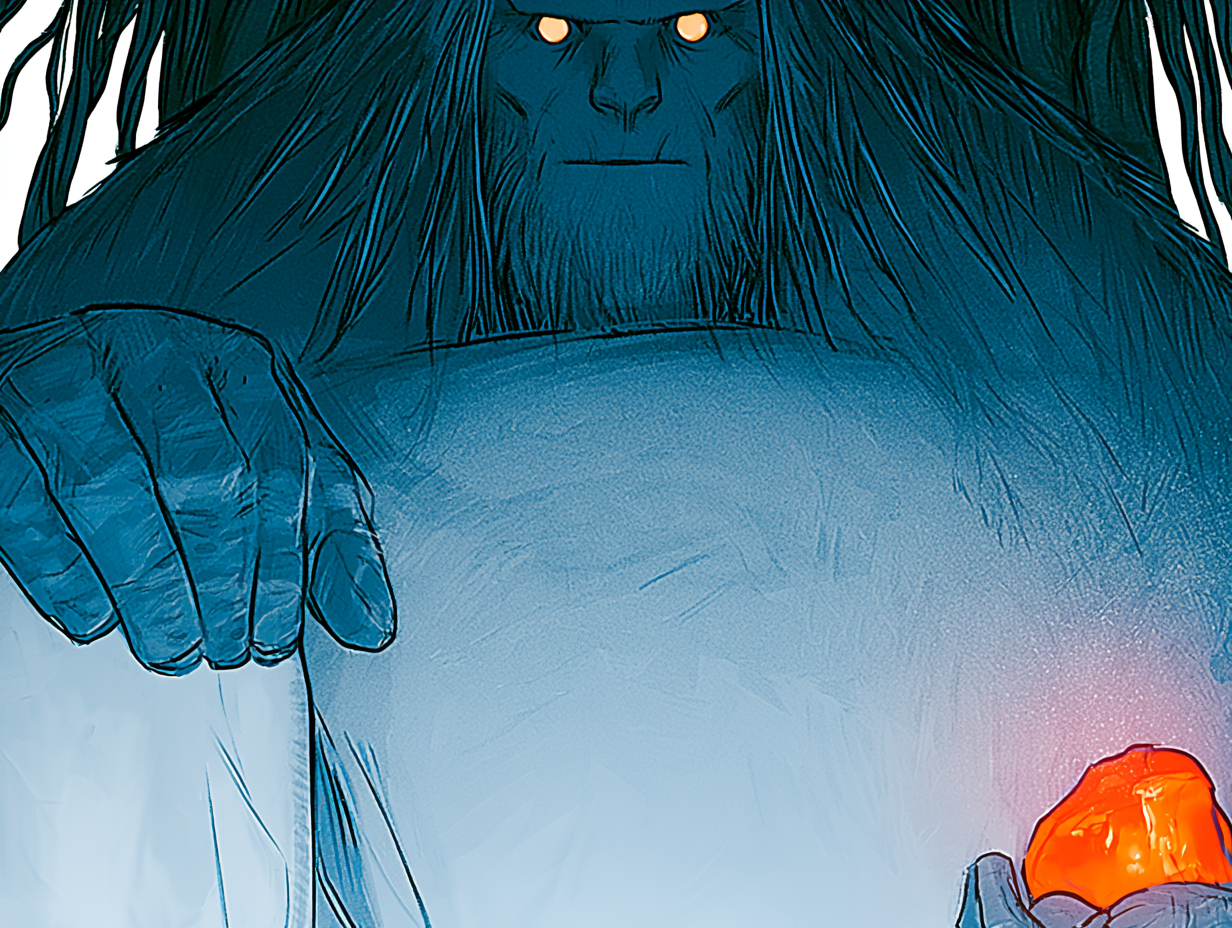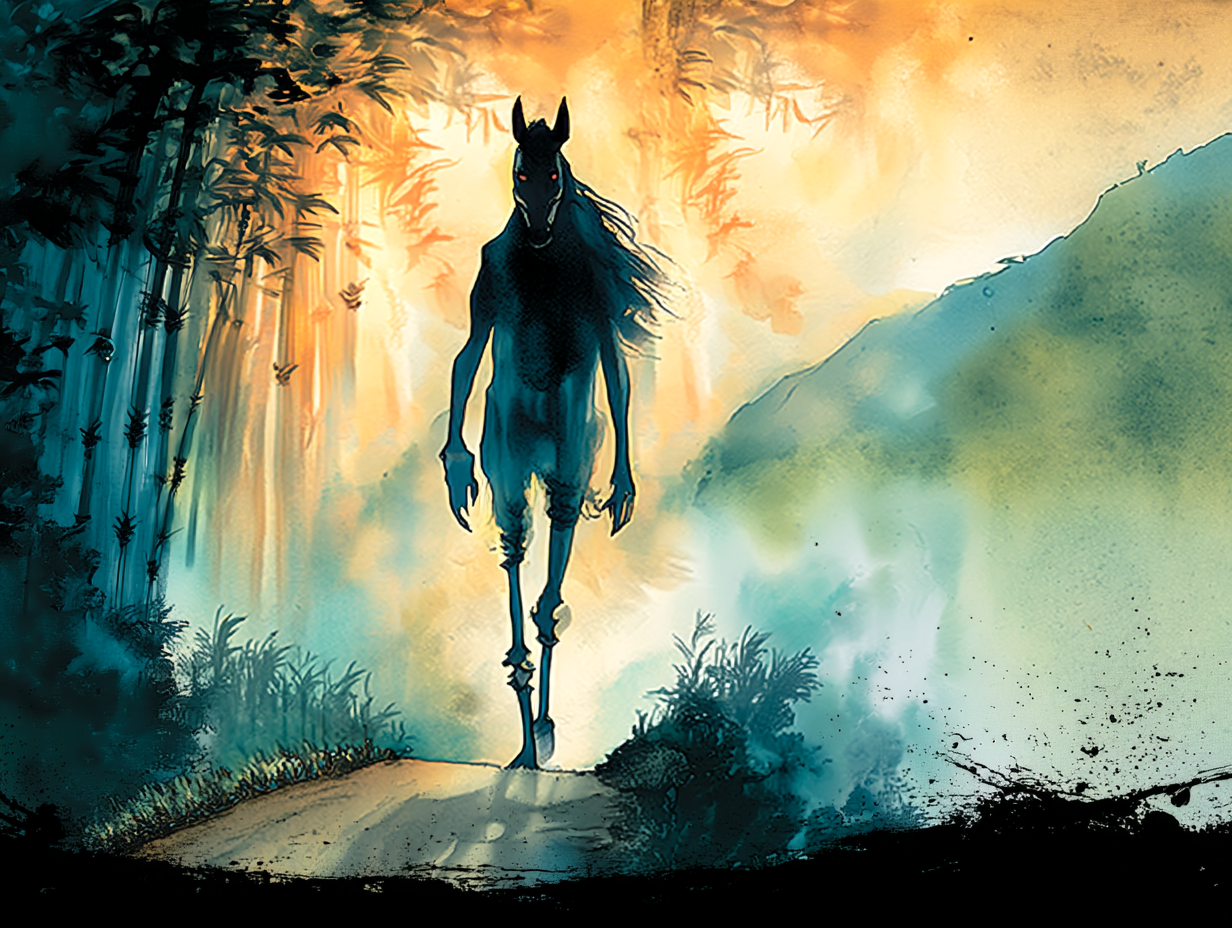
Ask ten people what a Tikbalang looks like and you'll get more than one answer. Horse-headed man on human legs. Man's torso on a horse's body. A horse standing upright on two legs, too tall to be natural. The shape isn't fixed — the role is.
What it does: leads travelers in circles. Someone walking a familiar path suddenly can't find their way home, doubling back past the same tree, the same rock, for hours. Folklore doesn't call this getting lost. It calls it being led.
The counter-charm: wear your shirt inside out. The logic isn't really explained — it just breaks the spell, in story after story, region after region.
The mane: some tellings say pulling three strands of hair from a Tikbalang's mane turns it into a servant, bound to whoever holds them. Getting close enough to try is, understandably, the hard part.
Where it lives: forests, mountains, and often near a balete tree — the same tree associated with several other guardian spirits in Philippine folklore, the Kapre included.
In the book: the Tikbalang doesn't just mislead travelers — it tells a better version of the walk afterward. Three hours becomes a night. A wrong turn becomes a test survived. It's less a liar than an editor, and by the time it's done, even it half-believes the retelling.
Quick facts
- Form varies by region: horse-headed man, man with a horse's body, or an unnaturally tall horse
- Best known for leading travelers in circles near their own homes
- Traditional counter-charm: wear your shirt inside out
- Often associated with balete trees, alongside other guardian spirits like the Kapre
- Appears in Book 1, Tiktik: A Summer of Three Names