There's no definitive Kapre. Folklore doesn't have one author, so it doesn't owe anyone one version.
The name changes by region. Tagalog: Kapre. Visayas: Agta. Ilocos: Pugot. Same figure, different word.
The tree changes. Balete, acacia, mango, sometimes bamboo, depending on who's telling it.
The size changes. Nine feet tall in some tellings. Barely bigger than a man in others.
The cigar isn't original. Tobacco arrived with Spanish colonization, layered onto an older tree-spirit belief. It's a later addition, not the root of the story.
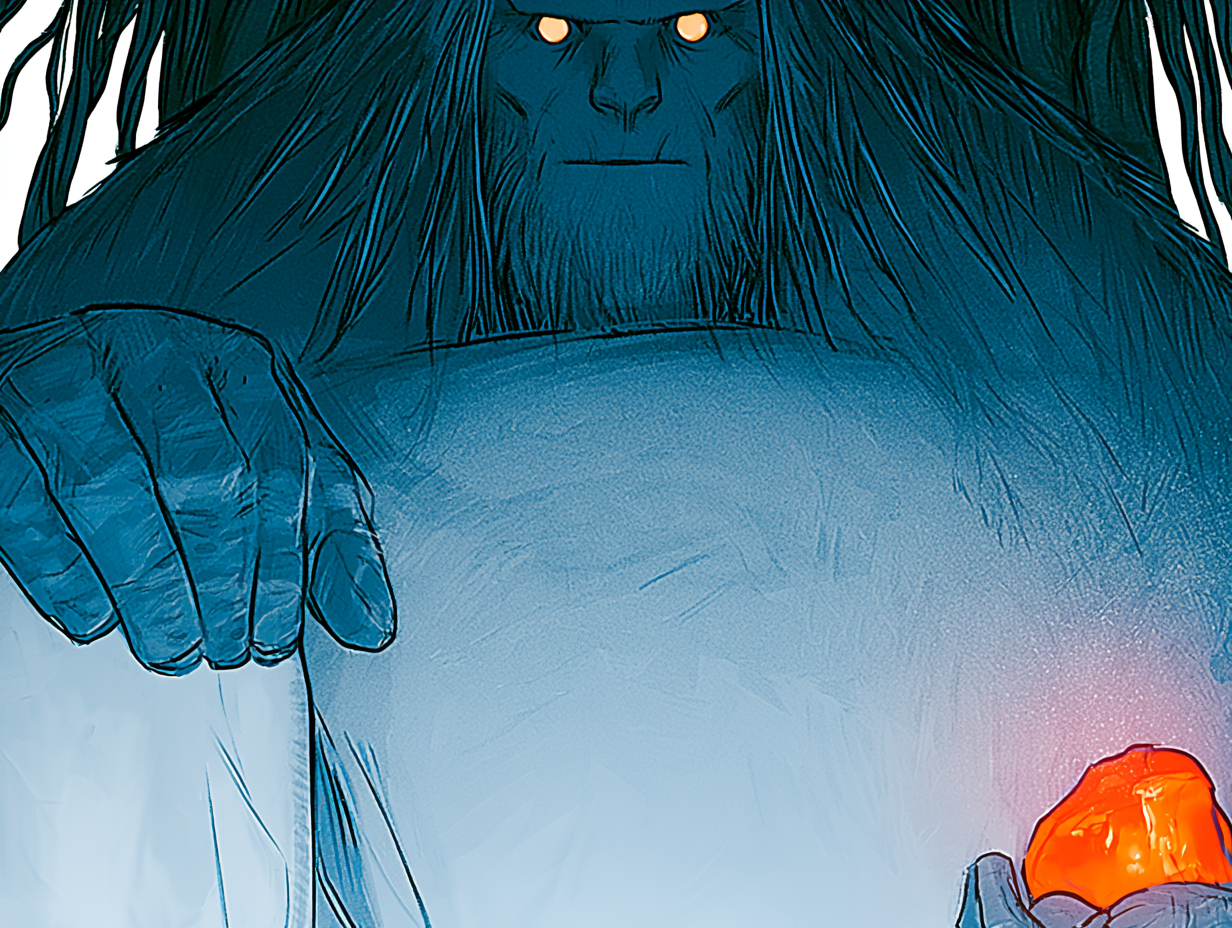
In the book: no cigar. He keeps a small fire instead — an ember cupped in a hand the size of a door, with fireflies circling it. He's not a giant guarding his tree so much as a resident who's kept a fifty-year promise to protect a family's land, one night at a time. He doesn't speak — not shyness, just how he's built — and communicates through the wood, the fog, and the fire. He can't be bribed. Offer him something small and honest, though, and he remembers it a long time.
Quick facts
- Also known as: Agta (Visayas), Pugot (Ilocos)
- Home tree varies by region: balete, acacia, mango, bamboo
- Size varies: "barely bigger than a man" to nine feet
- The cigar is a Spanish-colonial-era addition, not part of the original belief
- Appears in Book 1, Tiktik: A Summer of Three Names, and opens the creature-POV anthology